What is gray mold?
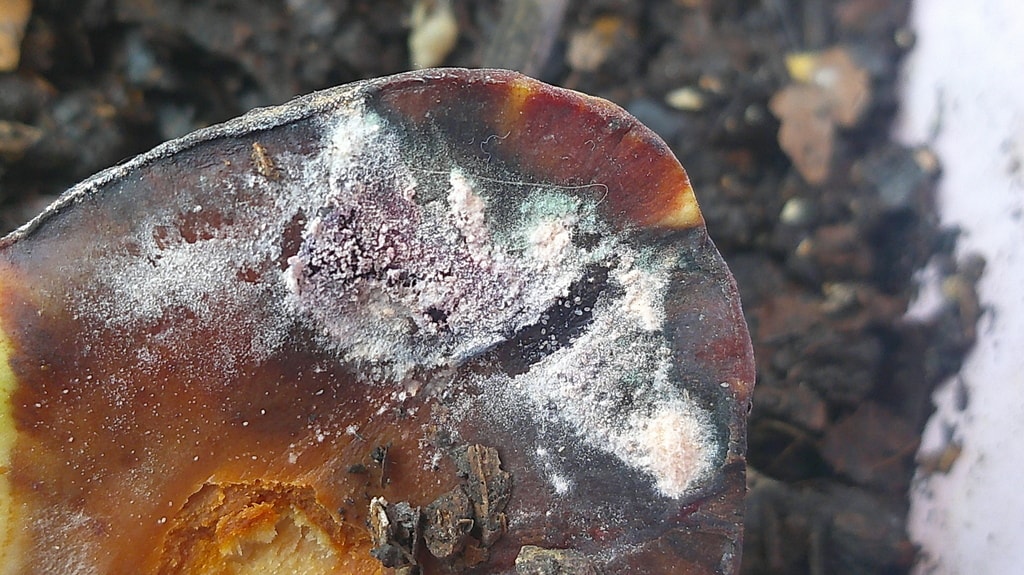
Gray mold is a fungal disease caused by Botrytis cinerea that appears as fuzzy gray to brown growth on flowers, leaves, and stems. [3][3] Tier 1 · Primaryuniversity_extensionMulti-state Extension ConsortiumView source ↗ Verified 2026-04-11Prevention is primarily environmental, because Botrytis cinerea needs cool temperatures, high humidity, and free moisture on plant surfaces to infect and sporulate. [7][7] Tier 1 · Primaryuniversity_extensionOregon State University ExtensionView source ↗Fungicides protect healthy tissue but cannot cure an existing infection, so controlling the environment is the main defense. [4][4] Tier 1 · Primaryuniversity_extensionCornell UniversityView source ↗ Verified 2026-04-11
Botrytis cinerea is one of the most common fungal diseases in controlled environments and affects most crop types throughout production. [5][5] Tier 1 · Primaryuniversity_extensionPenn State UniversityView source ↗The fungus is ubiquitous in growing environments, so management relies on controlling conditions rather than excluding the pathogen. [2][2] Tier 1 · Primaryuniversity_extensionUniversity of TennesseeView source ↗ Verified 2026-04-11
How do you identify gray mold?
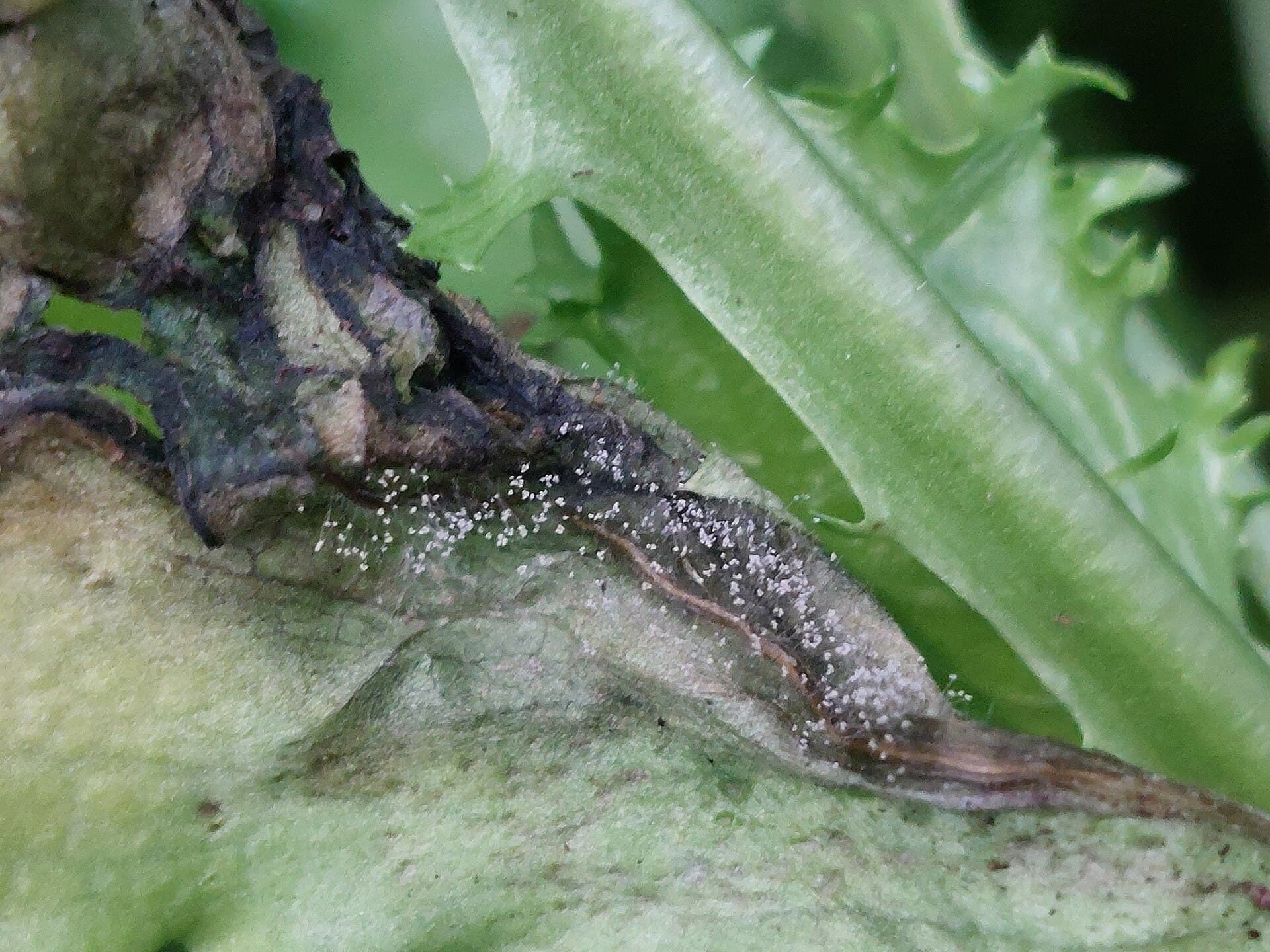
Gray mold shows as a gray to brown fuzzy growth on affected flowers, leaves, and stems, often starting on damaged or aging tissue. [3][3] Tier 1 · Primaryuniversity_extensionMulti-state Extension ConsortiumView source ↗ Verified 2026-04-11Affected tissue first becomes soft and water soaked, then turns brown and develops the characteristic gray spores. [3][3] Tier 1 · Primaryuniversity_extensionMulti-state Extension ConsortiumView source ↗ Verified 2026-04-11In dense flower clusters, gray to brown fuzzy growth can develop inside the cluster and rot the interior before any external symptom is visible. [6][6] Tier 1 · Primaryuniversity_extensionUniversity of Connecticut CAHNRView source ↗
Because the interior can rot first, inspect dense clusters by gently parting them to check for internal browning. [8][8] Tier 1 · Primaryuniversity_extensionUniversity of Kentucky ExtensionView source ↗Heavily infected material releases masses of silver gray spores that appear as dust coming off the tissue. [4][4] Tier 1 · Primaryuniversity_extensionCornell UniversityView source ↗ Verified 2026-04-11To confirm the pathogen, seal suspect tissue in a plastic bag with a damp paper towel, where light gray to tan cobweb like growth confirms Botrytis. [5][5] Tier 1 · Primaryuniversity_extensionPenn State UniversityView source ↗
What conditions does gray mold need to take hold?
Gray mold needs cool temperatures, high humidity, and free moisture on plant surfaces to infect and sporulate. [7][7] Tier 1 · Primaryuniversity_extensionOregon State University ExtensionView source ↗Botrytis cinerea is favored by cool temperatures around 60°F and persistent wet or humid conditions. [4][4] Tier 1 · Primaryuniversity_extensionCornell UniversityView source ↗ Verified 2026-04-11In greenhouse crops, infection occurs through wounds when relative humidity is above 90 percent and temperature is below 77°F. [2][2] Tier 1 · Primaryuniversity_extensionUniversity of TennesseeView source ↗ Verified 2026-04-11
One detailed threshold set for controlled environments requires free moisture on tissues for 8 to 12 continuous hours, canopy humidity above 93 percent, and temperatures between 55 and 65°F. [5][5] Tier 1 · Primaryuniversity_extensionPenn State UniversityView source ↗Dense, tightly packed flower clusters raise internal humidity and restrict airflow, which creates an ideal microclimate for infection. [6][6] Tier 1 · Primaryuniversity_extensionUniversity of Connecticut CAHNRView source ↗Stagnant air lets moisture sit on plant surfaces and allows spores to accumulate and spread. [5][5] Tier 1 · Primaryuniversity_extensionPenn State UniversityView source ↗
| Factor | Favors gray mold | Discourages gray mold |
|---|---|---|
| Temperature[5][5] Tier 1 · Primaryuniversity_extensionPenn State UniversityView source ↗ | Cool, 55 to 65°F | Temperatures outside the 55 to 65°F infection range |
| Humidity[5][5] Tier 1 · Primaryuniversity_extensionPenn State UniversityView source ↗ | Canopy humidity above 93 percent | Canopy humidity kept below 93 percent |
| Leaf moisture[5][5] Tier 1 · Primaryuniversity_extensionPenn State UniversityView source ↗ | Free moisture for 8 to 12 continuous hours | Surfaces that dry within a few hours |
| Air movement[6][6] Tier 1 · Primaryuniversity_extensionUniversity of Connecticut CAHNRView source ↗ | Stagnant, still air | Continuous airflow of about 0.5 to 1.0 m/s |
| Canopy density[6][6] Tier 1 · Primaryuniversity_extensionUniversity of Connecticut CAHNRView source ↗ | Dense, crowded plantings | Spaced plants with an open canopy |
How does gray mold spread and infect plants?
Gray mold spreads by airborne spores that infect plants through wounds, senescing tissue, and dense flower structures. [8][8] Tier 1 · Primaryuniversity_extensionUniversity of Kentucky ExtensionView source ↗Botrytis cinerea survives as a saprophyte on decaying plant debris and produces enormous quantities of spores. [5][5] Tier 1 · Primaryuniversity_extensionPenn State UniversityView source ↗Spores are readily liberated into the air and are carried on air currents and splashing water to healthy tissue. [5][5] Tier 1 · Primaryuniversity_extensionPenn State UniversityView source ↗
Some Botrytis species form small black resting structures called sclerotia on dead tissue, and fungal mycelium can overwinter in woody stem debris. [4][4] Tier 1 · Primaryuniversity_extensionCornell UniversityView source ↗ Verified 2026-04-11These resting structures germinate later to produce new infectious spores, so debris left in the space carries the disease between crops. [4][4] Tier 1 · Primaryuniversity_extensionCornell UniversityView source ↗ Verified 2026-04-11Once established in an enclosed space, spores become highly concentrated and drive rapid new infections despite climate management. [1][1] Tier 1 · Primaryuniversity_extensionNC State UniversityView source ↗ Verified 2026-04-11
How do you prevent gray mold through environment control?
Prevent gray mold by removing the conditions it needs: hold humidity low, keep air moving, and space plants for airflow. [7][7] Tier 1 · Primaryuniversity_extensionOregon State University ExtensionView source ↗Environmental management is described as the single best preventive method, because it eliminates the cool, humid, stagnant conditions the fungus depends on. [7][7] Tier 1 · Primaryuniversity_extensionOregon State University ExtensionView source ↗During flowering, keep relative humidity low, with sources citing a target below roughly 55 percent in the grow space. [8][8] Tier 1 · Primaryuniversity_extensionUniversity of Kentucky ExtensionView source ↗
Run dehumidification and airflow fans continuously during the dark period, when temperatures drop and humidity naturally rises. [7][7] Tier 1 · Primaryuniversity_extensionOregon State University ExtensionView source ↗Maintain continuous air movement through the canopy at about 0.5 to 1.0 m/s so moisture does not sit on plant surfaces. [6][6] Tier 1 · Primaryuniversity_extensionUniversity of Connecticut CAHNRView source ↗Do not let plants remain wet for more than 12 hours, since prolonged surface wetness at favorable temperatures lets spores germinate. [7][7] Tier 1 · Primaryuniversity_extensionOregon State University ExtensionView source ↗Increase plant spacing and open dense clusters through strategic defoliation to lower humidity within the canopy. [7][7] Tier 1 · Primaryuniversity_extensionOregon State University ExtensionView source ↗
How does sanitation and crop handling reduce gray mold risk?
Reduce gray mold risk by removing dead and blighted tissue, spacing plants for airflow, and clearing debris between crops. [4][4] Tier 1 · Primaryuniversity_extensionCornell UniversityView source ↗ Verified 2026-04-11Remove faded or blighted flowers and leaves promptly, but only when the foliage is dry, because handling wet infected tissue spreads spores. [4][4] Tier 1 · Primaryuniversity_extensionCornell UniversityView source ↗ Verified 2026-04-11Necrotic tissue serves as the primary substrate the fungus colonizes, so dead and senescing material should be cleared as it appears. [8][8] Tier 1 · Primaryuniversity_extensionUniversity of Kentucky ExtensionView source ↗
Because the fungus enters through wounds, make clean pruning cuts to minimize wound surfaces. [1][1] Tier 1 · Primaryuniversity_extensionNC State UniversityView source ↗ Verified 2026-04-11Sanitize tools between plants to avoid moving the pathogen from plant to plant. [8][8] Tier 1 · Primaryuniversity_extensionUniversity of Kentucky ExtensionView source ↗Practice thorough end of season sanitation by removing all plant debris and cutting stalks at or below ground level to eliminate overwintering structures. [4][4] Tier 1 · Primaryuniversity_extensionCornell UniversityView source ↗ Verified 2026-04-11Remove and bag infected material rather than composting it, so spores are taken out of the growing area. [8][8] Tier 1 · Primaryuniversity_extensionUniversity of Kentucky ExtensionView source ↗
How do you treat an active gray mold outbreak?
Treat an active outbreak by isolating and removing infected tissue, correcting the environment, and applying an integrated treatment program. [8][8] Tier 1 · Primaryuniversity_extensionUniversity of Kentucky ExtensionView source ↗Immediately remove and bag infected flowers, leaves, or clusters, and sanitize tools between cuts. [8][8] Tier 1 · Primaryuniversity_extensionUniversity of Kentucky ExtensionView source ↗Handle and remove infected tissue only when it is dry, because disturbing wet infected tissue releases spores that start new infections. [4][4] Tier 1 · Primaryuniversity_extensionCornell UniversityView source ↗ Verified 2026-04-11
Correct the environment at the same time by lowering humidity and increasing airflow, because climate management is the primary control and chemical options are limited. [1][1] Tier 1 · Primaryuniversity_extensionNC State UniversityView source ↗ Verified 2026-04-11Fungicides protect healthy tissue but cannot cure tissue that is already infected, so removal and environmental correction come first. [4][4] Tier 1 · Primaryuniversity_extensionCornell UniversityView source ↗ Verified 2026-04-11Where chemical or biological products are used, apply them preventively to protect healthy tissue and begin before disease onset. [3][3] Tier 1 · Primaryuniversity_extensionMulti-state Extension ConsortiumView source ↗ Verified 2026-04-11Scout dense clusters daily during susceptible stages and remove new infections immediately to prevent spread to adjacent plants. [6][6] Tier 1 · Primaryuniversity_extensionUniversity of Connecticut CAHNRView source ↗
Why is an integrated program necessary for gray mold?
An integrated program is necessary because managing gray mold requires environmental, cultural, and biological controls together. [8][8] Tier 1 · Primaryuniversity_extensionUniversity of Kentucky ExtensionView source ↗Integrated management combines humidity and airflow control, sanitation, careful handling, and preventive treatments. [8][8] Tier 1 · Primaryuniversity_extensionUniversity of Kentucky ExtensionView source ↗Resistant strains of the fungus already exist to several fungicide active ingredients, including fenhexamid, thiophanate methyl, and iprodione. [5][5] Tier 1 · Primaryuniversity_extensionPenn State UniversityView source ↗
To slow resistance, rotate fungicide FRAC codes and modes of action and never make successive applications from the same group. [5][5] Tier 1 · Primaryuniversity_extensionPenn State UniversityView source ↗Because chemical options are limited and can fail, careful climate management remains the most important defense. [1][1] Tier 1 · Primaryuniversity_extensionNC State UniversityView source ↗ Verified 2026-04-11Preventive fungicide or biological sprays fit into the program to protect healthy tissue during cool, humid conditions. [4][4] Tier 1 · Primaryuniversity_extensionCornell UniversityView source ↗ Verified 2026-04-11
Frequently asked questions about gray mold
What temperature and humidity does gray mold need?
Can fungicides cure gray mold once it appears?
What humidity should you target to prevent gray mold during flowering?
Why does gray mold appear inside dense flower clusters first?
How does gray mold survive between crops?

Curated from university research, peer-reviewed science, and manufacturer documentation, then verified claim by claim. Every factual statement on Meridian traces to a primary source.